Underwater Solar Panels Reach 10 Meter Depth, Opening Path for Self‑Powered Marine Drones
Underwater Solar Panels Reach New Depths
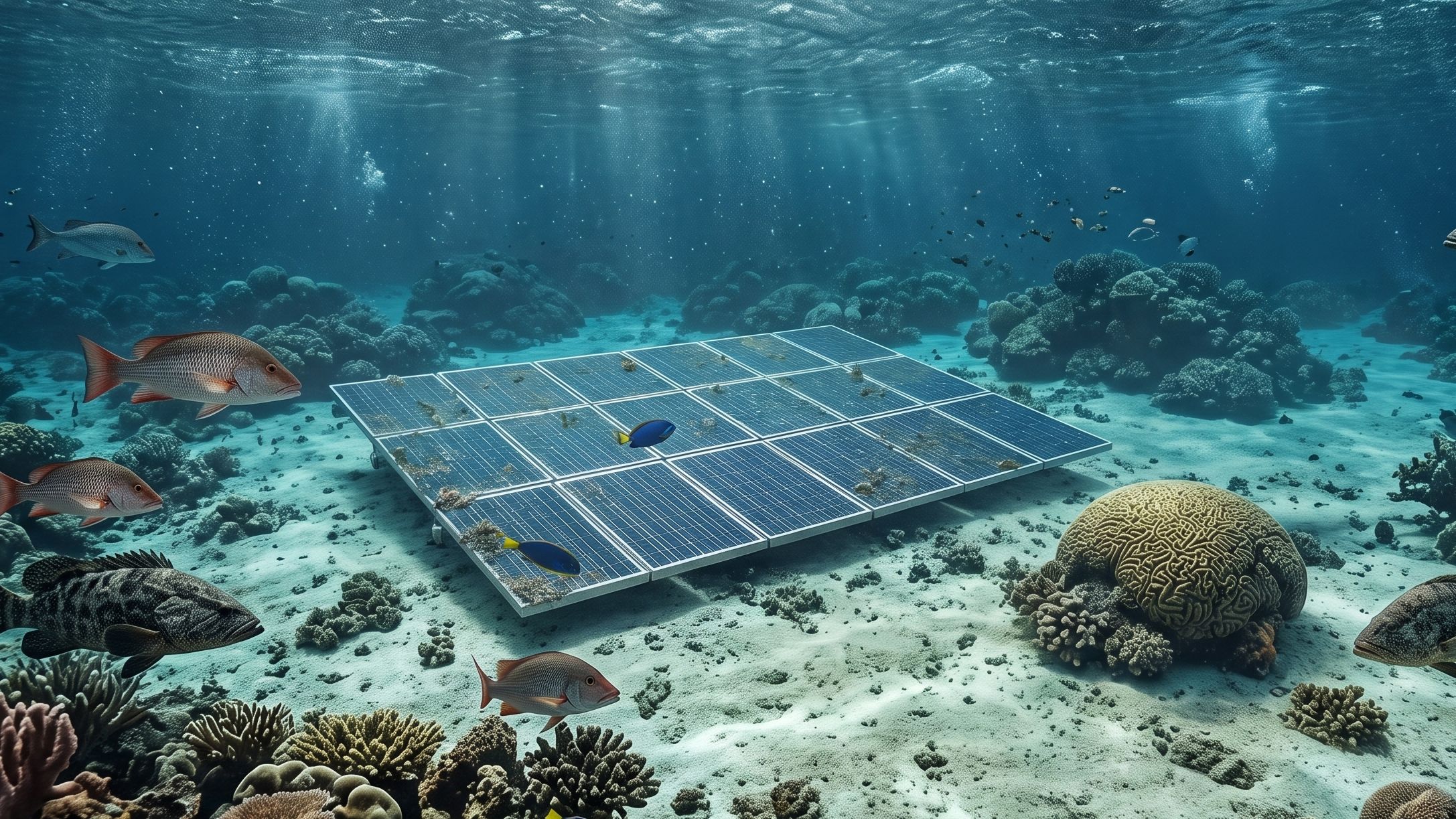
A research team has demonstrated solar panels that continue to generate electricity while submerged as deep as ten meters. The breakthrough relies on a specialized perovskite formulation that retains optical clarity and electronic performance in a water‑filled environment. Traditional photovoltaic devices lose efficiency quickly under water because light is filtered and the cells degrade in a moist atmosphere. The new material overcomes these limitations by allowing photons to pass through the panel and by protecting the active layer from corrosion. This advance could enable marine drones and other underwater robots to operate for extended periods without returning to a surface charging station.
How the Technology Works
The core of the system is a perovskite semiconductor tuned for high absorption in the blue‑green spectrum that penetrates water. Researchers encapsulated the perovskite in a transparent, waterproof polymer that prevents moisture ingress while maintaining high light transmission. Electrical contacts were redesigned to resist galvanic corrosion, and the panel’s backing incorporates anti‑fouling coatings to limit bio‑growth. Laboratory tests showed consistent power output at depths ranging from one to ten meters, with performance dropping only modestly compared to surface conditions.
Why Depth Matters for Marine Applications
- Extended mission endurance - Drones can stay operational longer by harvesting energy on site.
- Reduced logistical burden - Operators no longer need to surface for battery swaps or recharging.
- Enhanced data collection - Continuous power supports sensors, cameras, and communication equipment.
These advantages are especially valuable for scientific research, environmental monitoring, and inspection tasks where frequent surface interventions are costly or impractical.
Potential Benefits for Autonomous Underwater Vehicles
The ability to generate power underwater could transform several sectors:
- Environmental monitoring - Continuous sensing of water quality, temperature, and marine life.
- Infrastructure inspection - Persistent surveillance of offshore platforms, pipelines, and coastal structures.
- Search and rescue - Extended search windows without the need for support vessels.
By eliminating reliance on finite battery capacity, underwater solar panels could shift the economics of marine robotics from short, costly missions to long‑term, data‑rich operations.
Remaining Technical Hurdles
Despite promising results, several challenges remain before widespread adoption:
- Scalability - Producing large‑format panels that maintain performance across the entire ten‑meter depth range.
- Durability - Ensuring long‑term resistance to pressure, temperature fluctuations, and marine organisms.
- Integration - Designing power management systems that efficiently combine solar input with existing battery storage.
Addressing these issues will require further material refinements and engineering innovations.
Outlook for Commercial Deployment
The research community is already exploring partnerships with marine technology firms to prototype integrated drone systems. Early field trials are planned in coastal waters where sunlight penetration is sufficient and operational demands are high. If durability and scalability challenges are met, the technology could become a standard component of future underwater autonomous platforms, much as solar panels have become ubiquitous on land‑based drones.
Takeaway
Underwater solar panels that function at ten meters depth represent a notable step toward self‑sustaining marine drones. By converting ambient light into electricity beneath the waves, the technology promises longer missions, lower operational costs, and richer data collection. Continued development will focus on scaling production, improving robustness, and seamless integration with existing underwater robotics. The achievement illustrates how advances in materials science can unlock new capabilities for autonomous systems operating in challenging environments.