Google Gemini 4 Argon cracks 59-year nuclear fusion puzzle in hours
Introduction
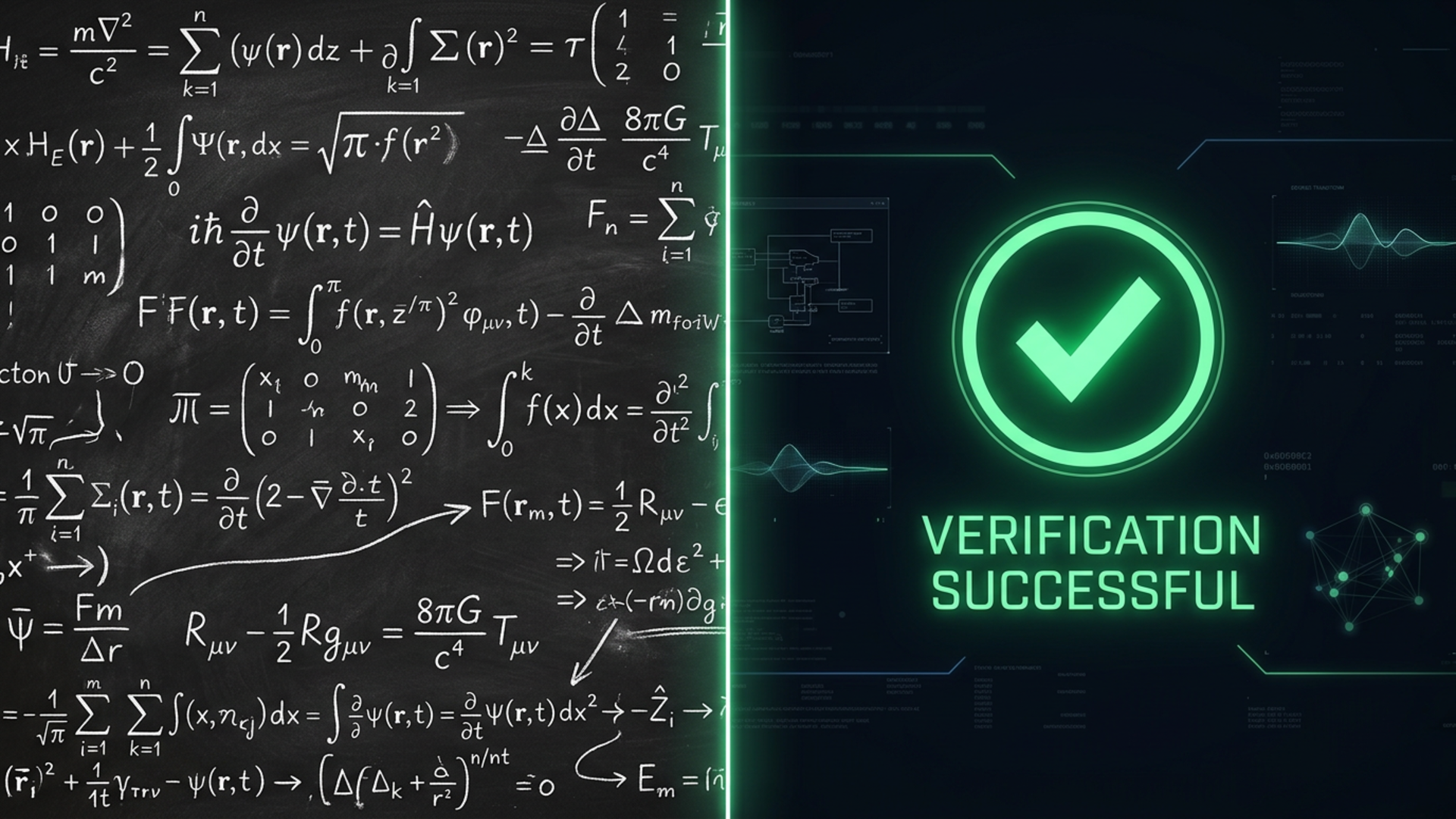
The recent announcement that Google Gemini 4 Argon has helped researchers overturn a long-standing nuclear fusion conjecture has sparked excitement across the scientific community. For nearly six decades, a theoretical barrier in magnetic confinement fusion seemed immutable. In a matter of hours the AI system generated new mathematical configurations that could reshape how engineers model and test fusion reactors. This breakthrough illustrates how modern machine learning tools are accelerating discovery in fields that traditionally rely on painstaking manual computation. It also raises questions about the future of human-led research and the role of autonomous systems in solving complex physics problems.
Background
Magnetic confinement fusion aims to replicate the process that powers the Sun by using magnetic fields to hold superheated plasma away from reactor walls. The technique relies on precise control of particle trajectories, a challenge that has inspired countless theoretical models. A central conjecture formulated decades ago suggested that certain plasma stability limits could not be surpassed without sacrificing confinement efficiency. This idea guided experimental design and limited optimism about achieving net energy gain. Despite incremental progress, the conjecture persisted as a conceptual ceiling that many believed would require fundamentally new physics to overcome.
AI’s Role in the Breakthrough
Google Gemini 4 Argon, a large language model specialized for scientific reasoning, was tasked with exploring existing mathematical solutions for magnetic confinement. By ingesting a vast library of peer-reviewed papers, simulation data, and open-source code, the system identified patterns that human researchers had missed. Within hours it produced a set of novel configurations that satisfy previously incompatible constraints. These configurations were then fed into fusion simulation software, where they demonstrated viable plasma behavior under realistic conditions. The result is a proof of concept that AI can act as a catalyst for hypothesis generation and rapid prototyping in physics.
Implications for Fusion Research
- Accelerated design cycles: Researchers can now iterate on reactor concepts at a speed previously impossible.
- Expanded solution space: AI uncovers pathways that lie outside traditional analytical frameworks.
- Increased collaboration: Interdisciplinary teams can leverage AI to bridge knowledge gaps.
- Potential cost reduction: Faster validation of ideas may lower the expense of building and testing physical prototypes.
Beyond the technical advantages, the breakthrough could influence funding priorities and international collaborations. Nations investing heavily in fusion may redirect resources toward AI-augmented projects, accelerating the timeline for commercial reactors.
The integration of AI into fusion research could also inspire similar approaches in other complex scientific domains such as climate modeling, materials science, and drug discovery. It signals a shift from purely deductive research to a hybrid model where machine inference complements human intuition.
Challenges Ahead
First, the generated configurations must undergo rigorous experimental validation before they can be considered reliable. Second, the computational resources required to train and run large language models raise questions about sustainability and accessibility. Third, the scientific community must establish clear guidelines for attributing credit when AI contributes to discovery. Finally, overreliance on AI could diminish foundational expertise if researchers become dependent on automated tools for core reasoning. Additionally, ethical frameworks must evolve to address the delegation of decision making to autonomous systems.
Conclusion
The success of Google Gemini 4 Argon in dismantling a 59-year-old nuclear fusion conjecture demonstrates the transformative potential of artificial intelligence in scientific research. By merging vast data synthesis with creative problem solving, AI offers a new lens through which humanity can tackle entrenched challenges. As the technology matures, the fusion community stands at a pivotal moment where human ingenuity and machine capability can together usher in a new era of clean energy for humanity.
Takeaway
- AI can dramatically shorten the time needed to explore complex physics problems.
- Human oversight remains essential to validate and interpret AI-generated insights.