MINIX's 128GB Ryzen AI Mini PC Packs a Punch—and a Vegan Leather Handle
Introduction
In a market where compact computing often means compromise, MINIX has unveiled a new mini PC that challenges expectations. The Ryzen AI Max+ 395 model combines high‑end AI processing, generous memory, and a quirky yet refined chassis. While the device’s specifications are impressive on paper, its design choices raise questions about the future of small‑form‑factor workstations and how manufacturers balance performance with personality.
The Power Within: AI and Compute Capabilities
At the heart of the machine sits AMD’s Ryzen AI Max+ 395 processor, delivering 126 TOPS of AI compute. This level of performance positions the mini PC alongside larger workstations that typically target AI inference, model training, and large‑language‑model (LLM) workloads.
Key hardware highlights include:
- 128 GB of DDR5 RAM – ample memory for multitasking, data science pipelines, and running multiple AI models simultaneously.
- AMD Ryzen AI Max+ 395 CPU – integrated AI acceleration alongside traditional cores, offering a blend of general computing and specialized inference power.
- 126 TOPS AI throughput – sufficient for real‑time image generation, video upscaling, and other compute‑intensive tasks.
For developers and creators who need to run LLMs locally, the combination of generous RAM and dedicated AI cores reduces the bottleneck that often forces reliance on cloud services. The result is a device that can serve as a portable sandbox for experimentation without the latency of remote inference.
Design Choices: From Metal Feet to Vegan Leather
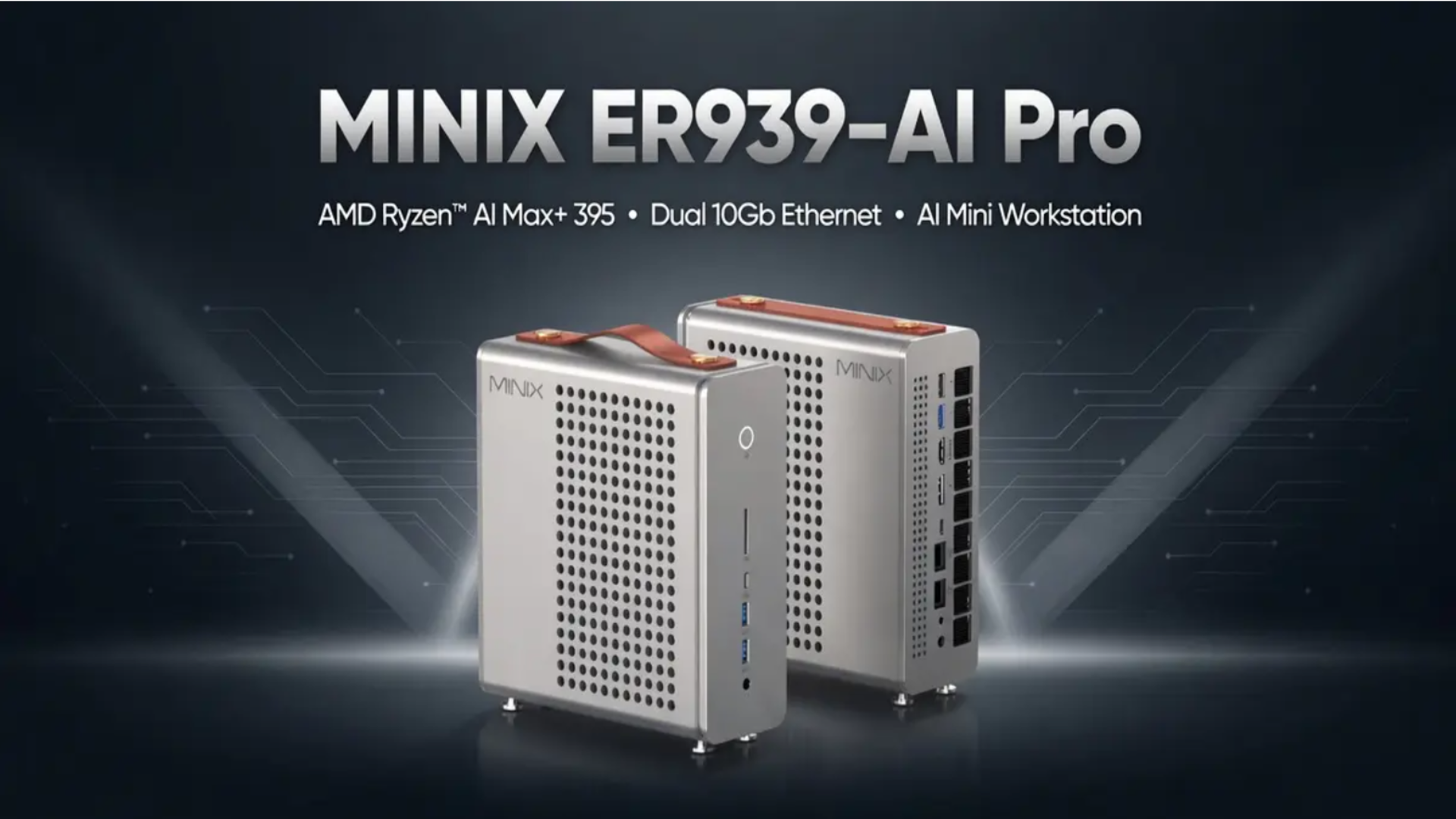
Beyond raw performance, MINIX’s design team clearly aimed to make a statement. The chassis is built around a metal foot structure that elevates the unit, improving airflow and giving it a stable, desk‑friendly stance. This practical element is paired with a more unexpected feature: a vegan leather handle that wraps around the side of the enclosure.
Why include a handle? The answer lies in mobility. While many mini PCs are intended to remain stationary, this model invites users to reposition it quickly—whether moving between workstations, transporting to a client site, or simply adjusting ergonomics. The vegan leather not only adds a tactile, premium feel but also signals an eco‑conscious design choice, aligning with growing demand for sustainable materials in consumer electronics.
Additional design notes:
- Compact footprint – fits within standard monitor stands or small desks.
- Metal reinforcement – enhances durability while maintaining a lightweight profile.
- Minimalist aesthetics – matte finish with subtle branding, allowing the device to blend into professional environments.
These choices suggest that MINIX is targeting a niche that values both performance and portability, without sacrificing style.
Networking and LLM Optimization
A mini PC intended for AI workloads must also handle data transfer efficiently. The Ryzen AI Max+ 395 platform integrates advanced networking capabilities, supporting high‑speed Ethernet and Wi‑Fi 6E. This ensures that data can be streamed to and from the device without becoming the limiting factor in AI pipelines.
Networking features include:
- Wi‑Fi 6E for low‑latency wireless connections, essential when pulling large datasets from cloud storage.
- 2.5 GbE Ethernet port for wired setups, providing consistent bandwidth for intensive tasks.
- Bluetooth 5.2 for peripheral connectivity, useful for developers who rely on external GPUs or specialized input devices.
The chassis is also engineered with LLM workloads in mind. Internal thermal solutions are calibrated to sustain prolonged AI inference without throttling, a common issue in compact systems where heat dissipation is limited. By pairing robust cooling with efficient power delivery, the device maintains performance during extended sessions.
Why This Matters for Developers and Power Users
The introduction of a mini PC with 128 GB RAM and 126 TOPS AI compute reshapes expectations for what a portable workstation can achieve. Traditionally, such specifications were confined to full‑size towers or laptops with larger footprints and higher price tags. MINIX’s approach demonstrates that form factor does not have to be a proxy for capability.
For software engineers, data scientists, and content creators, the device offers a single‑unit solution for both development and deployment. The ability to run LLMs locally reduces reliance on external APIs, which can be costly or subject to rate limits. Moreover, the integrated AI acceleration means that inference tasks can be performed at the edge, preserving data privacy when handling sensitive information.
From a market perspective, the product signals a broader trend: manufacturers are experimenting with material choices and ergonomics to differentiate compact hardware. The vegan leather handle, while a novelty, reflects an industry shift toward sustainability and user‑centric design. It also hints that future mini PCs may adopt more personalized aesthetics, moving beyond the utilitarian black boxes of the past.
Takeaway
MINIX’s Ryzen AI Max+ 395 mini PC proves that a small chassis can house substantial AI power and generous memory without sacrificing usability. The combination of 128 GB RAM, 126 TOPS AI compute, and thoughtful design elements—such as metal feet and a vegan leather handle—creates a device that is both a capable workstation and a statement piece. For professionals who need high‑performance AI on the go, this mini PC offers a compelling, portable alternative to traditional desktops and laptops.