Oumuamua Revisited: Why the First Interstellar Visitor Still Fuels the Alien Tech Debate
The First Confirmed Interstellar Object
In October 2017 the Pan-STARRS survey telescope in Hawaii captured a faint point of light that would soon rewrite the story of our solar system. Designated C/2017 U1 (later nicknamed Oumuamua), the object traced a hyperbolic path that carried it through the inner solar system at speeds exceeding what the Sun’s gravity could retain. Its closest approach occurred on 19 October, after which it slipped away, accelerating slightly as it left. What made Oumuamua unusual was not just its origin beyond the heliosphere, but the absence of the classic signs of a comet—no visible coma, no tail, and a remarkably steady brightness curve.
Why the Observation Was Unusual
Expected Behavior of an Interstellar Comet
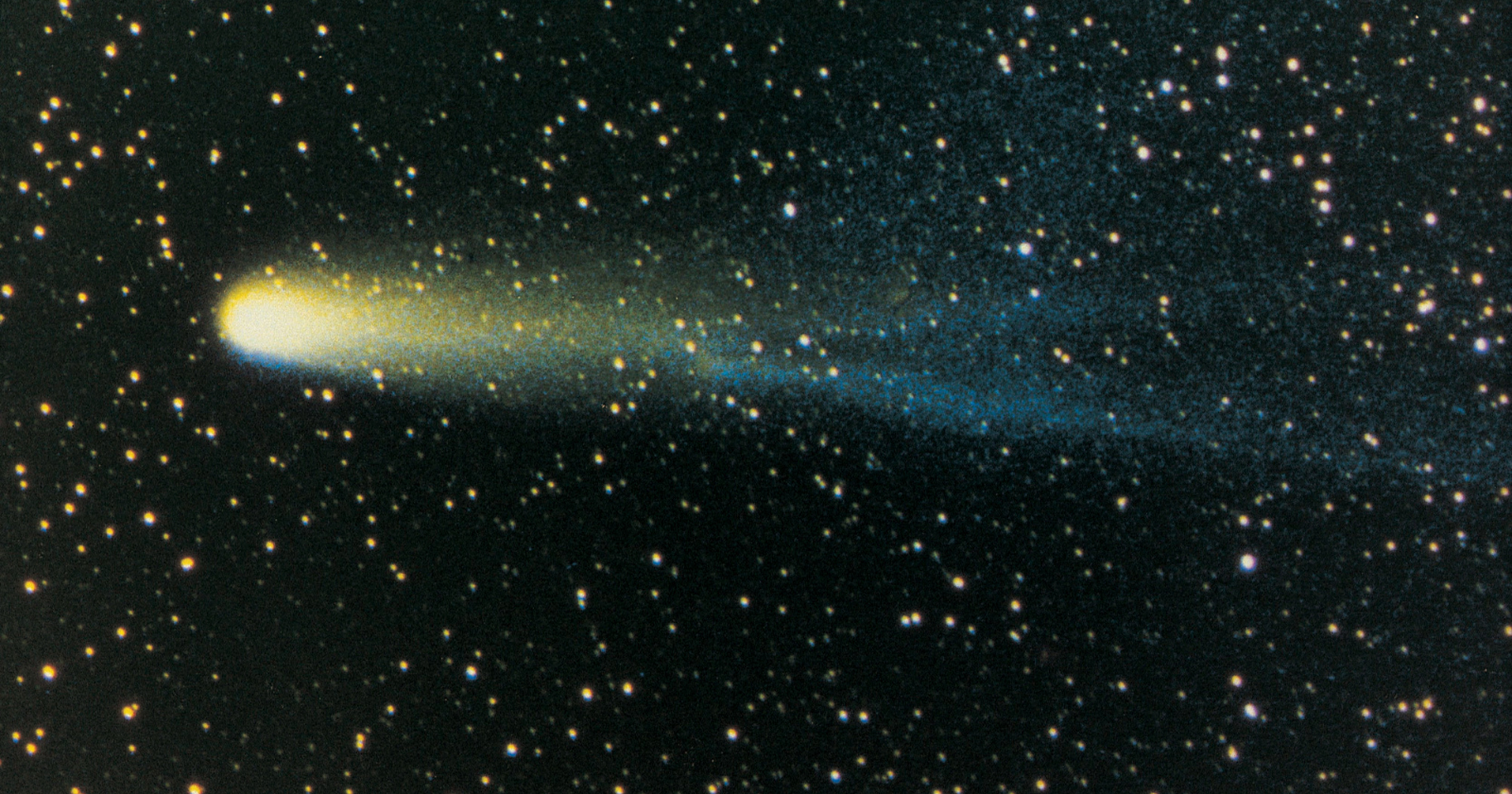
- Coma formation: As a frozen body approaches the Sun, ices sublimate, releasing dust and gas that form a bright coma.
- Tail development: Solar radiation pressure and wind push the coma material into a tail pointing away from the Sun.
- Observable activity: Even small comets typically show measurable outgassing detectable by spectroscopic monitoring.
Oumuamua displayed none of these features. Its light curve was smooth, its spectrum lacked the absorption lines associated with common ices, and spectroscopic observations showed no evidence of gas release. The object’s elongated shape, inferred from its rapid brightness variations, suggested a solid, perhaps metallic, composition.
The Acceleration Mystery
After its perihelion, Oumuamua’s orbital speed increased more than would be expected from pure gravitational dynamics. While small variations can result from outgassing jets, the observed acceleration was consistent with a gentle push—exactly the kind of force a solar sail would generate. This subtle deviation was enough to spark speculation that the object might be a manufactured probe, a notion popularized by Harvard astronomer Avi Loeb in a 2018 paper.
Loeb’s Alien Technology Hypothesis
Loeb argued that the combination of an interstellar origin, an unusually elongated shape, and a non-gravitational acceleration pointed toward an artificial origin. He proposed that Oumuamua could be a light sail—a thin, reflective surface propelled by the Sun’s photons—left behind by an advanced civilization. The hypothesis was deliberately provocative, intended to highlight the need for open‑mindedness when interpreting anomalous data.
Scientific Community’s Counter‑Arguments
The majority of astronomers rejected the alien technology claim, offering natural explanations:
- Rotational tumbling: If Oumuamua were spinning rapidly, surface features could briefly expose brighter or darker facets, mimicking a non‑gravitational push.
- Outgassing of exotic ices: Some proposed that the object contained volatile materials that sublimate at extremely low temperatures, producing jets too faint for detection.
- Fragmentation: A small, loosely bound aggregate could shed mass in a way that subtly alters its trajectory without a visible coma.
Multiple studies, including spectroscopic analyses from the Keck Telescope and radar observations, found no evidence of artificial structures or metallic surfaces. The consensus remains that Oumuamua is most likely a natural object, perhaps a fragment of a planetesimal ejected from another planetary system during its formation.
The Ongoing Debate and Future Prospects
Despite the prevailing view, the episode illustrates how a single enigmatic observation can reshape public perception of extraterrestrial possibilities. Recent papers continue to revisit the data, probing the limits of our measurement techniques. The James Webb Space Telescope and upcoming wide‑field surveys like Vera C. Rubin Observatory are expected to detect more interstellar visitors, offering fresh opportunities to test whether truly anomalous behavior emerges.
Key Takeaways from the Oumuamua Episode
- Interdisciplinary scrutiny: The object prompted input from astronomers, physicists, and even engineers, highlighting the value of cross‑disciplinary dialogue.
- Data quality matters: High‑resolution spectroscopy and continuous monitoring are essential to distinguish genuine non‑gravitational effects from noise.
- Speculation vs. evidence: While imaginative hypotheses capture the public imagination, rigorous evidence remains the cornerstone of scientific advancement.
- Search for technosignatures: Oumuamua has informed strategies for future SETI efforts, encouraging the community to consider passive detection of artificial objects alongside traditional radio searches.
What This Means for the Search for Extraterrestrial Life
The Oumuamua case underscores a broader truth: the universe is full of surprises, and our instruments are only just beginning to glimpse the diversity of objects that traverse interstellar space. Whether Oumuamua was a natural relic or a relic of alien engineering, its passage forced the scientific community to confront the possibility that technosignatures might appear in unexpected forms. Future missions and surveys will need to be equipped not only to detect such objects but also to characterize them with sufficient detail to settle debates definitively.
Takeaway
Oumuamua remains the benchmark for an interstellar visitor that defied expectations. While most astronomers favor natural explanations, the episode demonstrates how a single anomalous observation can ignite a global conversation about humanity’s place in the cosmos. It reminds us that the search for extraterrestrial intelligence must be as broad and imaginative as the universe itself, while always grounding hypotheses in robust data.